Annual Report 2025 is out. Read highlights and download the full report → View Report
Save the Nile Annual Report 2025
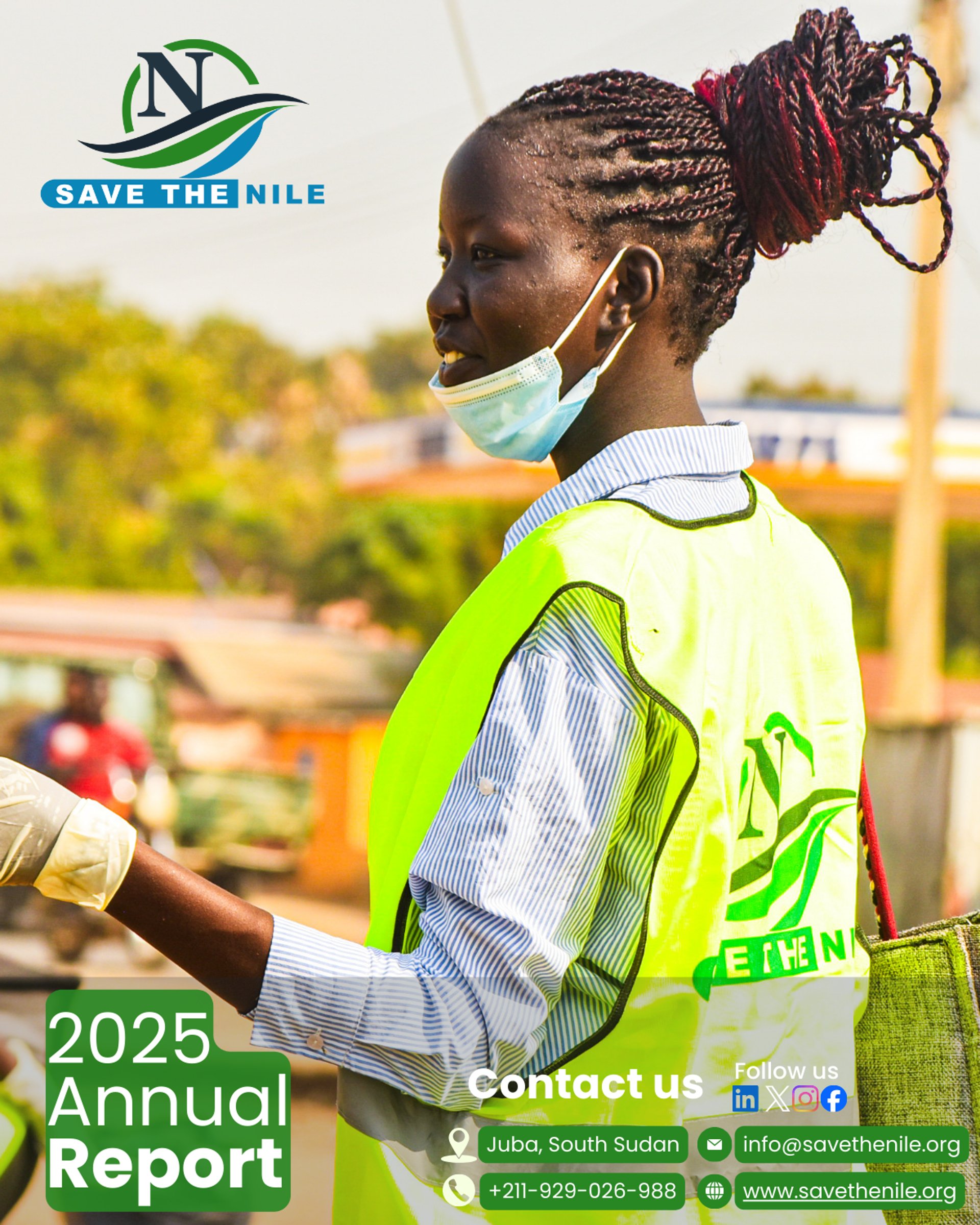
Save the Nile has published its Annual Report 2025, documenting our first year of action to reduce plastic pollution along the Nile in Juba. Read the highlights, partnerships, financial overview (USD 2,000), and our priorities for 2026.
REPORTS
Makur Majeng
1/15/20262 min read
We are pleased to publish the Save the Nile Annual Report 2025, which documents our first year of action to protect the Nile River in South Sudan. The report outlines what we achieved in 2025, the partnerships that made the work possible, how funds were used, and our priorities for 2026.
2025: Our Foundation Year
Save the Nile is a legally registered youth-led nonprofit organisation in South Sudan (Registration No. 5819). Since our founding in January 2025, we focused on practical local action to respond to rising plastic pollution and environmental degradation along the Nile in Juba.
Our work is driven by one simple belief: protecting the Nile protects lives. The river supports water supply, livelihoods, public health, and food security for river-dependent communities. But today, plastic waste, weak waste management, and climate-driven flooding are increasing threats to water quality and human health.
Key Highlights from 2025
In 2025, Save the Nile:
Mobilised 50+ youth and community members to take part in cleanups and awareness actions.
Led the Juba Riverbank Cleanup Initiative, completing 5+ cleanups in key areas including Hai Amarat, Hai Kasaba, and community sites supported by local partners.
Removed 300+ kilograms of plastic waste per cleanup site, improving sanitation in high-use public areas.
Conducted three radio talk shows on Radio Miraya, Power FM, and Radio Nova, reaching communities beyond Juba and including river-dependent audiences who are often offline.
Organised a dialogue at the University of Juba connecting plastic pollution to water safety and public health.
Delivered the 1st DIY Science Camp to strengthen youth knowledge and practical skills, including identifying plastic types using simple tests.
Partnerships That Made the Work Stronger
Community work succeeds when people work together. In 2025, we were proud to collaborate with institutions, student networks, churches, and local organisations that supported cleanups, learning activities, and mobilisation.
Our key partners and collaborators included:
Peacepedia and Digijeneus
Scenius Hub
Central Equatoria Students Association at Upper Nile University
French Institute, University of Juba
Seventh Day Adventist local church
Nile Green Packaging Ltd.
Financial Transparency (USD 2,000)
The Annual Report also includes a clear financial overview. In 2025, Save the Nile utilised USD 2,000 to support legal registration, cleanups, volunteer support, tools and safety equipment, outreach, youth education, and organisational setup.
What We Learned
2025 confirmed what we already suspected: people care, especially young people. But many do not have tools, systems, or alternatives to act consistently. We also learned that cleanups must be paired with responsible waste disposal, and that evidence and documentation must improve to strengthen advocacy.
Looking Ahead: 2026 Priorities
In 2026, Save the Nile will go deeper, not bigger. We will prioritise:
High school environmental education to build youth leadership early
Structured cleanups with safer waste disposal and follow-up action
Tracking hotspots and flooding impacts to understand pollution flow
Better evidence and impact measurement to guide policy engagement
Stronger partnerships and continued radio outreach to reach offline communities
Read the Full Report
You can read or download the full report here
Support the Work
Protecting the Nile requires shared responsibility. If you would like to support Save the Nile through partnership, volunteering, or donations, please visit: Donate Page
Contact Us
Follow Us On Social Media
Save the Nile (STN) is a registered nonprofit youth-led organisation in South Sudan dedicated to protecting the Nile River and its environment. STN focuses on combating plastic pollution, addressing climate change, and promoting socio-economic development for future generations.
Email: info@savethenile.org
WhatsApp: +211-929-910-888
© 2026 Save the Nile. All rights reserved.
Please Subscribe to Our Newsletter
This project was supported by National Geographic Society & The Nature Conservancy Externship Program
Location: Juba, South Sudan